
Contents

Author
Eric Vittardi
April 28, 2026
Read Time: Less than 6 Mins
Last Modified: April 28, 2026
Construction jobsite safety directly affects how contractors manage risk, control costs and keep projects moving and when safety processes break down, the impact shows up across the entire operation.
Crews move between jobsites faster, documentation requirements continue to grow and safety data is often spread across paper forms, spreadsheets and disconnected systems.
According to the Bureau of Labor Statistics, construction recorded more than 1,000 fatal work injuries in 2023 — the highest total for the industry since 2011 — underscoring why consistent safety management is more than a compliance exercise for contractors.
Beyond injury prevention, poor safety management affects productivity, project timelines, insurance costs and long-term business performance.
Contractors need a way to stay organized, reduce risk and keep safety information accessible across both the office and the field.
SafetyHQ is designed for exactly that.
Created specifically for construction companies, SafetyHQ helps contractors manage safety processes more clearly, more consistently and with less manual effort.
Key Takeaways for Contractors
- Construction safety management becomes more complex as companies grow and manage more projects at once
- Contractors need clear visibility into inspections, incidents, training and jobsite risks
- SafetyHQ helps centralize safety information and support more consistent safety processes across teams
- Better safety organization can help contractors reduce risk, improve communication and strengthen overall safety performance
Why Manual Safety Processes Fall Short
Manual safety processes make it harder for contractors to stay consistent — and inconsistency is where jobsite risk tends to grow.
Safety programs set the tone for how crews approach safety every day, from planning tasks to working in the field.
For safety programs to be effective, they need to be structured and visible so expectations are clear across every jobsite. They also need to be easy to manage wherever work is actually happening.
Many contractors still rely on paper construction safety forms, spreadsheets or scattered digital files to record safety.
But manual processes like that often become difficult to track as projects grow and teams expand, because they slow down construction jobsite communication, create unnecessary risk and make it harder for contractors to respond quickly when issues arise.
For example, with paper forms, construction jobsite inspections may be completed in the field but not shared quickly with the office. Or by using only a spreadsheet, incident reports may take longer to organize.
That is why a more organized safety structure matters so much in construction. It helps contractors move from reactive safety management to a more consistent, proactive approach.
How SafetyHQ Supports Day-to-Day Safety Management
SafetyHQ gives contractors a single place to manage inspections, training, incidents and documentation, so safety processes stay consistent whether crews are on one jobsite or ten.
By bringing key safety tools into one system, contractors can manage safety programs with greater consistency and visibility.
With SafetyHQ, contractors can:
- Conduct and document jobsite inspections using customizable digital forms
- Perform hazard assessments with real-time reporting to identify risks earlier
- Document jobsite incidents with structured reporting and follow-up workflows
- Store and manage safety documentation in a centralized system
- Access safety information from both the office and the field
When these processes are connected, safety becomes easier to manage as part of daily operations, not something that slows projects down.
Keeping Crews Informed With Toolbox Talks and Training
Gaps in crew communication are one of the most direct causes of preventable jobsite incidents — workers need to understand site hazards and expectations before work begins, not after something goes wrong.
SafetyHQ improves construction safety through digital Toolbox Talks and training management tools that help contractors keep workers informed and engaged.
Contractors can:
- Deliver safety meetings from any device using pre-built or customizable topics
- Track attendance and completion to ensure participation
- Send reminders for required safety discussions
- Maintain records of completed training for reporting and compliance
By making safety communication more accessible and trackable, contractors can reinforce safe practices across every jobsite.
Managing Risk Through Inspections, Incidents and Documentation
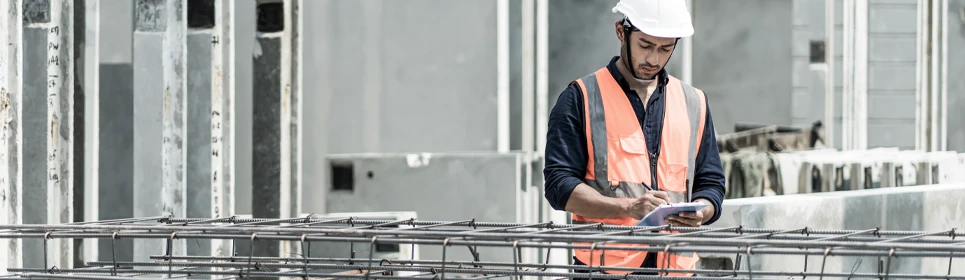
Effective worker health programs depend on consistent inspections and documentation to catch risks before they turn into incidents, injuries or compliance gaps.
Without it, risks can go unnoticed and reporting can become difficult to manage.
SafetyHQ helps contractors take a more structured approach with:
- Customizable inspection forms that can be updated as project needs change
- Real-time visibility into jobsite conditions, potential hazards and Job Hazard Analyses (JHAs)
- Digital incident reporting for faster documentation and response
- Centralized storage for safety records, reports and documentation
This level of organization helps contractors respond more quickly to issues while maintaining the documentation needed for compliance and internal accountability.
Certification Tracking and SDS Management Keep Teams Proactive
Construction safety management also depends on keeping up with employee training and required construction safety documentation.
Expired certifications or missing safety data sheets can create unnecessary risk.
SafetyHQ helps contractors stay ahead by:
- Tracking employee certifications and training records in one place
- Sending automatic notifications for upcoming expirations
- Providing access to a large library of safety data sheets (SDS)
- Eliminating the need for paper files and manual tracking systems
With better visibility into training and documentation, contractors can take a more proactive approach to maintaining compliance and confirm that workers have the required training before starting work or entering the jobsite.
A More Connected Approach to Jobsite Safety
When safety information is siloed across jobsites, small gaps in communication or documentation can compound quickly and contractors managing multiple crews need a system that keeps everyone working from the same page.
By centralizing safety processes — from inspections and incident tracking to training and documentation — SafetyHQ helps contractors create a more connected safety program.
Information flows more easily between the field and the office, keeping the team aligned and enabling a timely response to issues as they arise.
With SafetyHQ, crews can view safety information, complete tasks and stay informed from any jobsite, helping reduce delays and keep safety processes moving in real-time.

Why SafetyHQ Matters for Long-Term Business Success
Contractors who treat safety as an operational priority — not just a compliance requirement — tend to see fewer project disruptions, lower incident rates and more predictable job performance over time.
Strong safety processes can help reduce jobsite disruptions, protect employees and support more stable project performance.
SafetyHQ helps contractors take a more organized, proactive approach to safety by simplifying how safety information is managed, shared and acted on.
Instead of relying on disconnected tools, contractors gain a clearer structure that supports both safety and overall business performance.
For contractors looking to improve safety visibility, reduce risk and create more consistent jobsite processes, SafetyHQ offers a more practical way to manage safety.
Learn more by scheduling a demo!
Share Article
Make Your Inbox Smarter
Keep on current news in the construction industry. Subscribe to free eNews!
Related Articles
Summer Jobsite Safety Hazards Every Construction Worker Should Know
Summer jobsite safety means protecting construction crews from three seasonal hazards that spike in hot months: heat-related illness, UV exposure
Learn More

Why Integrate Accounting and Construction Safety Management
Construction safety management and accounting are two of the most important areas of a successful construction company. A strong safety
Learn More